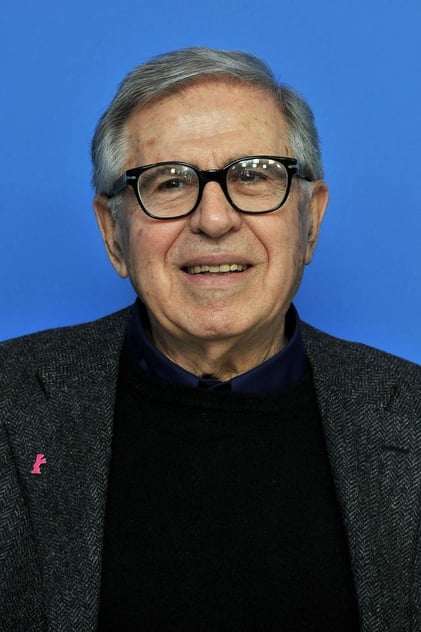
Paolo Taviani
Age: N/A | From: San Miniato, Tuscany, Italy
Person Details
Birthday:
Aliases: No known aliases
Gender: Male
Place of birth: San Miniato, Tuscany, Italy
Homepage:
Movie Involvements: 58
TV Involvements: 0
Most Famous Work
Biography
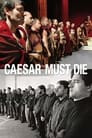
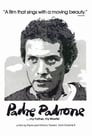
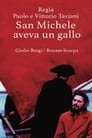
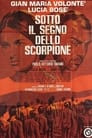
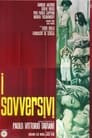
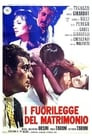
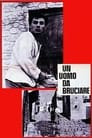
Paolo Taviani (8 November 1931 – 29 February 2024) and Vittorio Taviani (20 September 1929 – 15 April 2018), collectively referred to as the Taviani brothers, were Italian film directors and screenwriters who collaborated on film productions. At the Cannes Film Festival, the Taviani brothers won the Palme d'Or and the FIPRESCI prize for Padre Padrone in 1977 and the Grand Prix du Jury for La notte di San Lorenzo (The Night of the Shooting Stars, 1982). In 2012 they won the Golden Bear at the Berlin International Film Festival with Caesar Must Die. Vittorio Taviani died on 15 April 2018 at the age of 88. Both born in San Miniato, Tuscany, Italy, the Taviani brothers began their careers as journalists. In 1960 they came to the world of cinema, directing with Joris Ivens the documentary L'Italia non è un paese povero (Italy is not a poor country). They went on to direct two films with Valentino Orsini, Un uomo da bruciare (A Man to Burn) (1962) and I fuorilegge del matrimonio (Outlaws of Marriage) (1963). Their first autonomous film was I sovversivi (The Subversives, 1967), with which they anticipated the events of 1968. With actor Gian Maria Volonté they gained attention with Sotto il segno dello scorpione (Under the Sign of Scorpio, (1969) where one can see the echoes of Brecht, Pasolini, and Godard. In 1971, they co-signed the media campaign against Milan's police commissioner Luigi Calabresi, published in the magazine L'espresso. The revolutionary theme is present both in San Michele aveva un gallo (1971), an adaptation of Tolstoy's novel The Divine and the Human, a film greatly appreciated by critics, and in the film Allonsanfan (1974), in which Marcello Mastroianni has a role as an ex-revolutionary who has served a long term in prison and now views his idealistic youth in a much more realistic light, and nevertheless gets entangled in a new attempt in which he no longer believes. Their next film Padre Padrone (1977) (Palme d'Or at the Cannes Film Festival), taken from a novel by Gavino Ledda, speaks of the struggle of a Sardinian shepherd against the cruel rules of his patriarchal society. In Il prato (1979) there are nonrealistic echoes, while La notte di San Lorenzo (The Night of the Shooting Stars, 1982) narrates, in a fairy-tale tone, a marginal event in the days before the end of World War II, in Tuscany, as seen through the eyes of some village people. The film was awarded the Special Jury Award in Cannes. Kaos (1984)—another literary adaptation—is a poignantly beautiful and poetical film in episodes, taken from Luigi Pirandello's Short Stories for a year. In Il sole anche di notte (1990) the Taviani brothers transposed in 18th century Naples the story from Tolstoy's Father Sergius. From then onwards, the Tavianis' inspiration proved faltering. Successes like Le affinità elettive, (1996, from Goethe) and an attempt to woo the international audiences like Good morning Babilonia, (1987), on the pioneers of cinema history, alternate with lesser films like Fiorile (1993) and Tu ridi (1996), inspired by the characters and short stories of Pirandello. ... Source: Article "Paolo and Vittorio Taviani" from Wikipedia in English, licensed under CC-BY-SA 3.0.
Most Famous Work

The Night of the Shooting Stars
(1982) Writer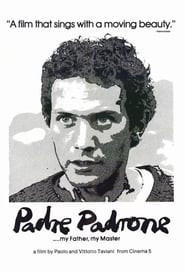
Padre Padrone
(1977) Writer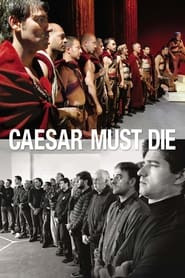
Caesar Must Die
(2012) Screenplay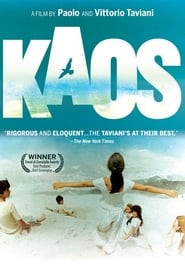
Kaos
(1984) Screenplay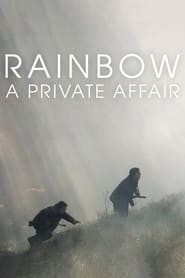
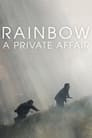
Rainbow: A Private Affair
(2017) Screenplay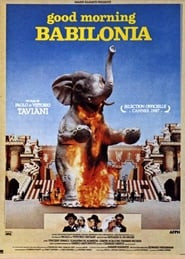
Good Morning, Babylon
(1987) Writer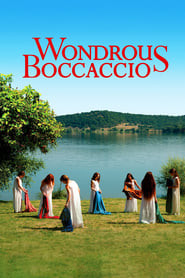
Wondrous Boccaccio
(2015) Director
A Man for Burning
(1962) WriterActing
| Year | Character | Movie/Tv |
|---|---|---|
| 2022 | Self | |
| 2020 | Himself | |
| 2015 | Sé stesso | |
| 2014 | Self | |
| 2013 | Self | |
| 2010 | Self | |
| 2004 | Self | |
| 2001 | Minister | |
| 1997 | N/A | |
| 1994 | Self | |
| 1975 | Self | |
| 1974 | Self | |
| Year | Character | Movie/Tv |





Directing
| Year | Role | Movie/Tv |
|---|---|---|
| 2022 | Director | |
| 2017 | Director | |
| 2015 | Director | |
| 2012 | Director | |
| 2007 | Director | |
| 2004 | Director | |
| 2002 | Director | |
| 2001 | Director | |
| 1998 | Director | |
| 1996 | Director | |
| 1993 | Director | |
| 1990 | Director | |
| 1987 | Director | |
| 1984 | Director | |
| 1982 | Director | |
| 1979 | Director | |
| 1977 | Director | |
| 1974 | Director | |
| 1972 | Director | |
| 1969 | Director | |
| 1967 | Director | |
| 1963 | Director | |
| 1962 | Director | |
| 1960 | Director | |
| 1959 | Director | |
| 1958 | First Assistant Director | |
| First Assistant Director | ||
| 1955 | Director | |
| 1954 | Director | |
| Year | Role | Movie/Tv |






Writing
| Year | Role | Movie/Tv |
|---|---|---|
| 2022 | Writer | |
| 2017 | Screenplay | |
| 2015 | Writer | |
| 2012 | Screenplay | |
| 2007 | Screenplay | |
| 2004 | Writer | |
| 1998 | Writer | |
| 1996 | Writer | |
| 1993 | Writer | |
| 1990 | Writer | |
| 1987 | Writer | |
| 1984 | Screenplay | |
| 1982 | Writer | |
| 1979 | Writer | |
| 1977 | Writer | |
| 1974 | Screenplay | |
| Story | ||
| 1972 | Screenplay | |
| 1969 | Writer | |
| 1967 | Writer | |
| 1963 | Writer | |
| 1962 | Writer | |
| Year | Role | Movie/Tv |